Crohn’s Disease Treatment in Los Angeles

Expert, Long-Term Management for Crohn's Disease and Inflammatory Bowel Disease

Understanding Crohn's Disease

Doctor consulting attentive female patient, discussing document in a medical office.
Crohn's disease is a chronic inflammatory bowel disease in which the immune system mistakenly attacks the lining of the digestive tract, causing persistent inflammation that can affect any segment of the GI tract from the mouth to the rectum. Unlike ulcerative colitis, which is confined to the colon, Crohn's disease can involve multiple layers of the bowel wall and multiple locations simultaneously, making it one of the most complex and variable conditions in gastroenterology.
Living with Crohn's disease leaves you navigating unpredictable flares, managing long-term inflammation, and working to protect the integrity of the GI tract over time. At Innovative GI, Dr. Cameron Sikavi, widely regarded as the best Crohn's disease doctor in Los Angeles, takes a proactive, evidence-based approach to Crohn's management, combining advanced diagnostics with individualized treatment strategies designed to achieve and maintain remission.

Signs and Symptoms of Crohn's Disease

Crohn's disease presents across a wide spectrum of severity, and its symptoms can vary significantly depending on which part of the GI tract is affected. Common signs and symptoms include:
Elderly man in orange shirt sitting on a couch, holding his side with a pained expression.
01
Persistent or recurrent abdominal pain and cramping, often in the lower right abdomen
02
Chronic diarrhea, sometimes with blood or mucus
03
Unintentional weight loss and reduced appetite
04
Fatigue that is disproportionate to activity level
05
Fever during active flares
06
Nausea or vomiting, particularly when the small intestine is involved
07
Perianal symptoms, including fissures, fistulas, or abscess formation
08
Extraintestinal manifestations, including joint pain, skin lesions, and eye inflammation
09
Nutrient deficiencies resulting from impaired small intestinal absorption

Because Crohn's symptoms overlap with several other GI conditions, including IBS, infectious colitis, and ulcerative colitis, accurate diagnosis requires objective endoscopic and pathological confirmation rather than symptom assessment alone.

Schedule Consultation
Accurate diagnosis is the foundation of effective Crohn's management. Dr. Sikavi uses a comprehensive, multi-modal approach to confirm the diagnosis, characterize disease location and severity, and identify complications before they progress. Diagnostic tools include:

How Crohn's Disease Is Diagnosed

01

Colonoscopy with Biopsy

Colonoscopy is the primary diagnostic tool for Crohn's disease, allowing Dr. Sikavi to directly visualize the colonic and terminal ileal mucosa, characterize the pattern and extent of inflammation, and collect tissue samples for pathological analysis. Biopsy findings are essential for distinguishing Crohn's from ulcerative colitis and other inflammatory conditions.

02

Upper Endoscopy (EGD)

When upper GI involvement is suspected, upper endoscopy evaluates the esophagus, stomach, and duodenum for Crohn's-related inflammation, which occurs in a meaningful subset of patients.

03

Capsule Endoscopy

For evaluating small bowel Crohn's disease beyond the reach of standard endoscopy, capsule endoscopy provides non-invasive visualization of the entire small intestinal mucosa.

04

Cross-Sectional Imaging

CT enterography and MR enterography assess the full thickness of the bowel wall and identify complications, including strictures, fistulas, abscesses, and extraluminal disease that endoscopy alone cannot evaluate.

05

Laboratory and Inflammatory Markers

Blood and stool tests, including CRP, ESR, fecal calprotectin, and comprehensive metabolic panels, help assess disease activity, monitor treatment response, and identify nutritional deficiencies.

How Crohn's Disease Is Treated

Effective Crohn's treatment in Los Angeles requires a strategy built around achieving deep remission, preventing complications, and preserving long-term bowel function. Dr. Sikavi takes a layered approach that evolves with your disease course and treatment response.
Biologic and advanced therapies
Biologic medications targeting TNF-alpha, integrins, and interleukins represent the most effective pharmacological tools for achieving and maintaining remission in moderate to severe Crohn's disease. Dr. Sikavi selects the appropriate agent based on disease location, severity, prior treatment history, and individual patient factors.
Immunomodulators
Medications including azathioprine, 6-mercaptopurine, and methotrexate are used alone or in combination with biologics to optimize treatment response and reduce the likelihood of antibody development against biologic agents.
Corticosteroids
Used for short-term induction of remission during acute flares, corticosteroids are not appropriate for long-term maintenance and are managed carefully to minimize systemic side effects.
Dietary and nutritional support
Specific dietary approaches, including exclusive enteral nutrition and low-residue diets, play an important role in managing Crohn's symptoms and supporting mucosal healing. Dr. Sikavi provides individualized nutritional guidance integrated into every treatment plan.
Therapeutic drug monitoring
Dr. Sikavi uses drug level and antibody testing to optimize biologic dosing and identify loss of response early, allowing for timely treatment adjustments before disease activity escalates.
Surgical referral
When strictures, fistulas, abscesses, or medically refractory disease require surgical intervention, Dr. Sikavi coordinates referrals to experienced colorectal surgeons and remains involved in post-operative management and surveillance.

Frequently Asked Questions About Crohn's Disease

Is Crohn's disease curable?
Why does the difference between Crohn’s disease and ulcerative colitis matter for treatment?
Which nutrient deficiencies are common in Crohn’s disease?
What should I do during a Crohn's flare?

Why Patients Choose Innovative GI for Crohn's Disease Treatment in Los Angeles

Managing Crohn's disease well over time requires oversight by the best Crohn's disease doctor in Los Angeles, who understands the full complexity of the disease and stays current with evolving treatment options through every phase of your condition.

Dr. Cameron Sikavi is a board-certified, UCLA-trained gastroenterologist who earned his medical degree from Chicago Medical School and completed a specialized fellowship in Gastroenterology and Hepatology at UC Irvine. A published researcher with deep expertise in inflammatory bowel disease and advanced endoscopic diagnostics, he brings the clinical rigor and investigative precision that complex, chronic conditions demand.

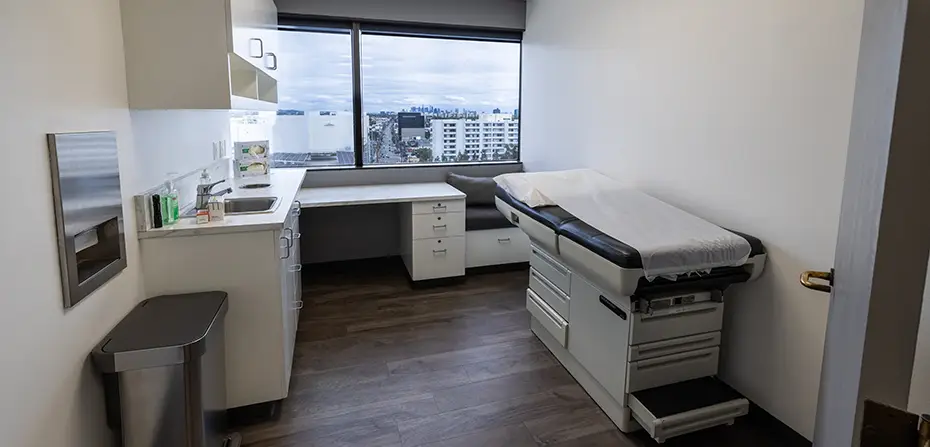
Our Los Angeles gastroenterology practice, located directly across from Cedars-Sinai Medical Center in the heart of West Hollywood and Beverly Grove, was designed to feel different from a typical GI clinic:
  • Comprehensive IBD evaluation including colonoscopy, capsule endoscopy, and cross-sectional imaging
  • Access to the full spectrum of biologic and advanced therapies with therapeutic drug monitoring
  • Individualized treatment protocols built around disease location, severity, and patient history
  • Nutritional assessment and dietary guidance integrated into every care plan
  • A focused, concierge-level environment where Dr. Sikavi gives you his full, undivided attention
  • Convenient access from Beverly Hills, West Hollywood, Mid-Wilshire, and the broader Westside
Ready for Crohn's disease care in Los Angeles built around a genuine, long-term partnership?
Modern medical exam room with examination table, sink, cabinets, and a large window showing city view.

Ready to stop guessing about your gastrointestinal issues and start feeling better?

Fill out the form and we’ll be in touch!