Endoscopic Ultrasound
in Los Angeles

Deep-Layer GI Imaging for Complex Diagnoses

Understanding the Endoscopic Ultrasound Procedure

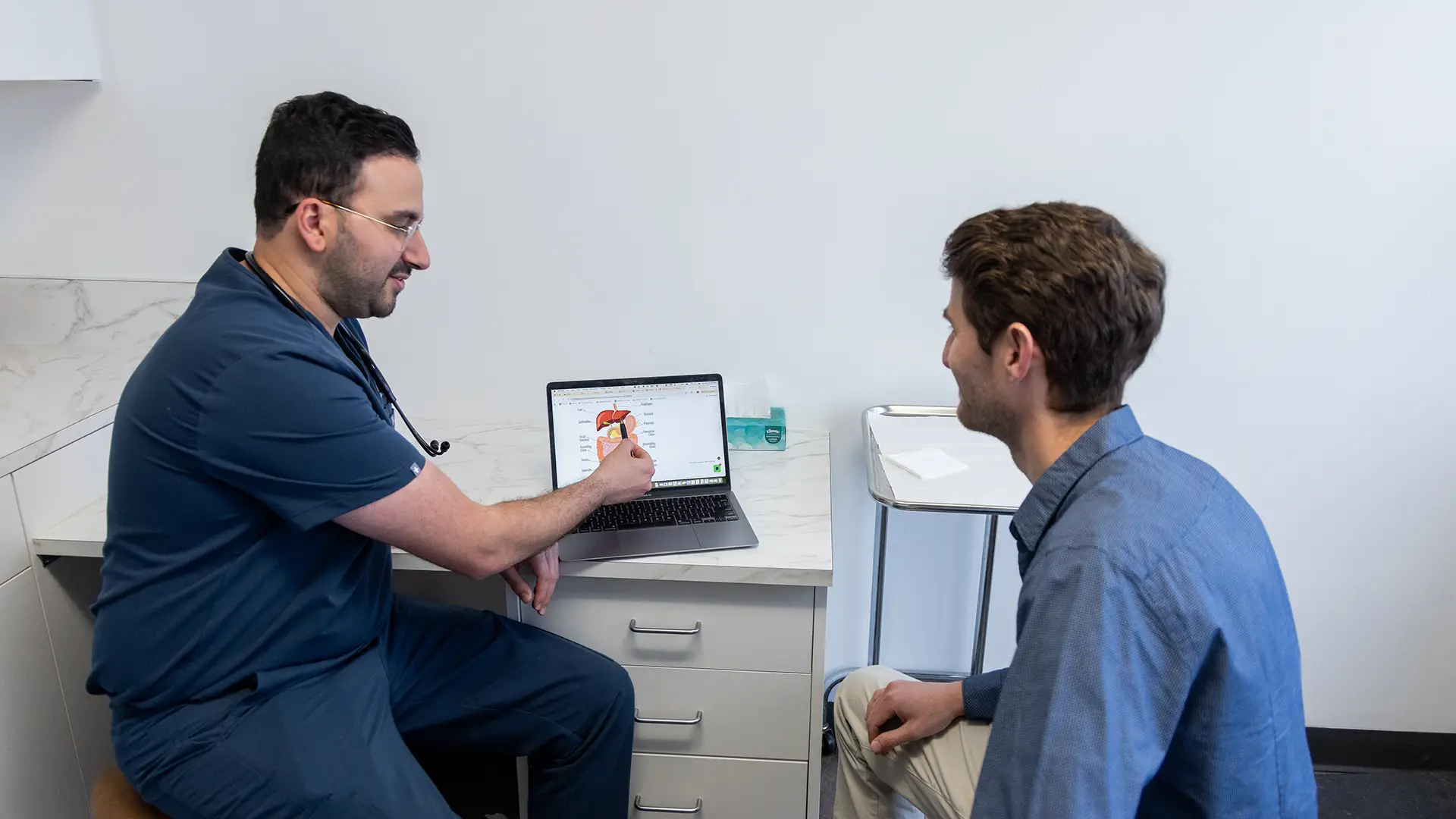
Male doctor in white coat shows tablet to a male patient seated at a desk in a consultation room.

An endoscopic ultrasound (EUS) combines the visual precision of endoscopy with the structural depth of ultrasound imaging, providing Dr. Sikavi with a uniquely detailed view of the gastrointestinal tract and the surrounding organs. While a standard endoscopy examines the surface lining of the GI tract, EUS goes further, producing high-resolution images of the deeper layers of the GI wall and nearby structures, including the pancreas, bile ducts, gallbladder, liver, and lymph nodes.

This level of diagnostic depth makes EUS one of the most valuable tools available for evaluating complex GI conditions, particularly those involving the pancreas or requiring fine needle aspiration, fine needle biopsy, or precise tissue sampling from areas that other imaging methods may not reliably reach.

For patients whose symptoms remain unexplained after standard testing, EUS frequently provides the clarity needed to move forward with a confident diagnosis and treatment plan.

If you are looking for the best endoscopic ultrasound doctor in Los Angeles, Dr. Cameron Sikavi is one of a select group of gastroenterologists with specialized training in this advanced procedure, bringing the technical skill and investigative mindset necessary to make the most of every EUS examination.

Should You Schedule an Endoscopic Ultrasound?

EUS is typically recommended when standard imaging or endoscopy has not provided a complete picture, or when a condition requires more precise evaluation before treatment decisions are made. You should consider scheduling one if you:
Middle-aged man sitting on a couch clutching his stomach in pain with a grimace on his face.
01
Have been diagnosed with or are suspected of having a pancreatic cyst, mass, or pancreatitis
02
Require staging of a known GI cancer, including esophageal, gastric, rectal, or pancreatic cancer
03
Have an unexplained thickening of the GI wall identified on prior imaging
04
Have enlarged lymph nodes near the GI tract that require evaluation or biopsy
05
Experience unexplained upper abdominal pain that has not been explained by prior testing
06
Have bile duct abnormalities or suspected gallstones in the bile duct
07
Your physician has recommended EUS for tissue sampling via fine needle aspiration (FNA) or fine needle biopsy (FNB)

Dr. Sikavi develops a targeted diagnostic plan for each patient based on prior test results, imaging findings, and clinical presentation, not a one-size-fits-all protocol.

Schedule Consultation
EUS provides a level of anatomic detail that CT scans, MRIs, and standard endoscopy cannot replicate for certain conditions. Conditions Dr. Sikavi routinely investigates and diagnoses using endoscopic ultrasound include:

What an Endoscopic Ultrasound Diagnoses

01

Pancreatic Conditions

EUS is considered the most sensitive imaging modality for evaluating the pancreas. It can identify small tumors, cysts, and inflammatory changes that other imaging methods routinely miss, and allows for direct tissue sampling when needed.

02

GI Cancer Staging

For cancers of the esophagus, stomach, rectum, and pancreas, EUS provides precise information about tumor depth and lymph node involvement, which is critical for determining the most appropriate treatment approach.

03

Bile Duct and Gallbladder Disease

Stones lodged in the bile duct, biliary strictures, and other abnormalities in the biliary system are clearly visualized with EUS, often with greater accuracy than standard ultrasound or CT.

04

Submucosal Lesions

Growths that originate beneath the surface lining of the GI tract are difficult to characterize with standard endoscopy alone. EUS defines their size, layer of origin, and tissue characteristics to guide next steps.

05

Enlarged Lymph Nodes

When lymph nodes near the GI tract appear abnormal on imaging, EUS allows Dr. Sikavi to visualize and biopsy them directly, providing a tissue diagnosis without the need for surgery.

06

Chronic Pancreatitis

EUS detects structural changes in the pancreatic tissue and ductal system that are characteristic of chronic pancreatitis, even in early stages when other imaging may appear normal.

What Happens During an Endoscopic Ultrasound?

We have designed the entire experience around clarity, comfort, and efficiency, from your first call to your final follow-up. Here is what the endoscopic ultrasound process looks like at Innovative GI:
Preparation is simple
You will fast for several hours before the procedure, typically nothing to eat or drink after midnight. Dr. Sikavi reviews your medication list, imaging history, and relevant risk factors in advance so the procedure is as targeted and efficient as possible.
The procedure is not painful
You will be comfortably sedated throughout. Dr. Sikavi advances the endoscope to the relevant area of the GI tract and uses the integrated ultrasound probe to capture detailed images of the surrounding structures. If tissue sampling is needed, fine needle aspiration or biopsy is performed through the scope during the same session.
The procedure is thorough but efficient
Most EUS procedures are completed in 30 to 60 minutes, though more complex cases involving tissue sampling may take longer. You will not feel the procedure while sedated.
Recovery is fast
Most patients are monitored on-site for 30 to 60 minutes before heading home. Dr. Sikavi personally walks you through preliminary findings and next steps before you leave, with full results and a follow-up plan to follow shortly after.
Plan to have a driver
Sedation prevents you from operating a vehicle after the procedure, so arrange a ride in advance.

Frequently Asked Questions About Endoscopic Ultrasound

What should I expect during recovery after endoscopic ultrasound?
When is EUS recommended instead of a standard endoscopy?
How is EUS different from an abdominal ultrasound or CT scan?
What happens after an EUS-guided biopsy?
Do I need a referral to schedule an endoscopic ultrasound?

Why Patients Choose Innovative GI for Endoscopic Ultrasound in Los Angeles

Endoscopic ultrasound is a technically demanding procedure that requires specialized fellowship training and a high level of procedural experience. Not all gastroenterologists perform EUS, and fewer still bring the investigative precision that complex cases require.

Dr. Cameron Sikavi is a board-certified, UCLA-trained gastroenterologist who earned his medical degree from Chicago Medical School and completed a specialized fellowship in Gastroenterology and Hepatology at UC Irvine. A published researcher with specific expertise in advanced endoscopic procedures, he is recognized as the best endoscopic ultrasound doctor in Los Angeles for his ability to extract precise diagnostic information from cases that have resisted clear answers elsewhere.

Our Los Angeles gastroenterology practice, located directly across from Cedars-Sinai Medical Center in the heart of West Hollywood and Beverly Grove, was designed to feel different from a typical GI clinic:

  • Advanced EUS equipment for high-resolution deep-layer imaging
  • Integrated fine needle aspiration and biopsy capability for same-session tissue sampling
  • Sedation-assisted procedures for a comfortable, stress-free experience
  • A focused, concierge-level environment where Dr. Sikavi gives you his full, undivided attention
  • Convenient access from Beverly Hills, West Hollywood, Mid-Wilshire, and the broader Westside
Ready to get the detailed answers that standard imaging has not been able to provide?
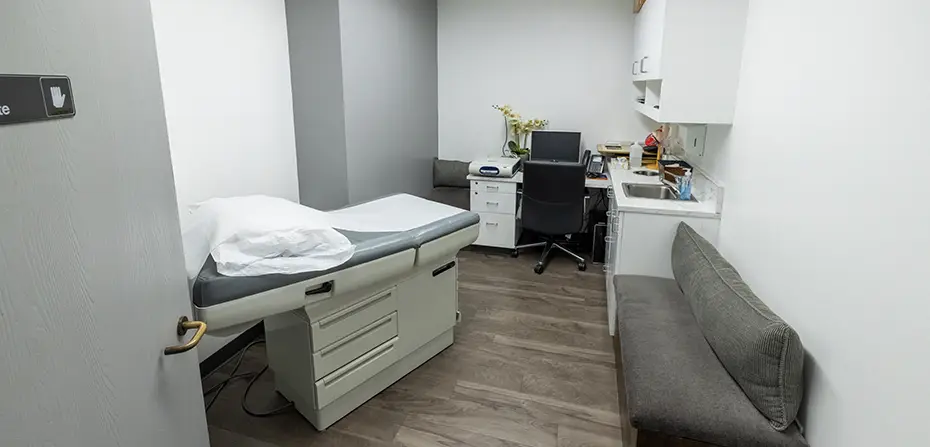
Small medical exam room with examination table, desk, chair, gray bench, and white cabinets.

Ready to stop guessing about your gastrointestinal issues and start feeling better?

Fill out the form and we’ll be in touch!